
What Information to Read on a Nutrition Label?


Nutrition label is the information about the nutrients that are present in the food packet. It is helpful to choose the products and keep a check on the amount of foods that we are eating. It also helps us to choose a healthier diet and make sure that our foods are safe to eat. Nutrition labels provide a wide range of information about foods. There are rules that nutrition labeling does not describe any nutritional information that is by any means false, misleading, deceptive or insignificant.
Nutrition labels create expectations among consumers regarding the healthfulness of products. These claims need to be scientifically confirmed and enforced through proper regulatory mechanisms. The Food Safety and Standard Authority of India (FSSAI) has already established a single reference point for all matters relating to food safety and standards across the country to determine and analyze the nutritional information on the packaging of major packed food products of leading Indian and multi-national brands being marketed in India.
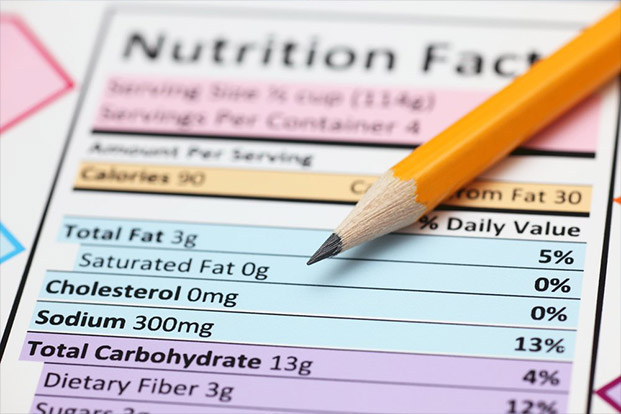
Information to read on Nutrition Labels are:-
- Ingredients list – It should be mentioned on the food packet especially the food contents more than one ingredients. It is helpful for individuals with food sensitivities/allergies.
- Serving size – It is an indicator for the quantity of one normal portion consumed by a person. The total weight of the packet should not be considered as the normal serving size. Serving sizes are standardized to make it easier to compare similar foods, they are provided in familiar units – tea spoons, table spoons, cups, pieces, grams, etc. The serving size on the food package influences the calories and all the nutrients listed on the label.
- Calorie per serving – It indicates the amount of calories, we will get from one serving.
- A calorie from fat – It specifies that how much fat we are going to get from one serving of that particular food. The content of saturated fats, unsaturated fats and trans fats should also be mentioned.
- The nutrition label – It should also provide the information regarding carbohydrates, sugar, proteins, cholesterol, sodium, potassium, phosphorus, fibre, etc.
- The Percentage Daily Value (% DV) – It helps to determined that the serving of food is high or low in nutrients.
Codex guidelines highlight the recommended energy, fat, protein, and carbohydrates . They are mentioned on nutrition labels. Dietary fibre should be added where a claim for dietary fibre is made and sugars where a claim is made for carbohydrates. The guidelines also allow for national adaptation stating “Any other nutrients deemed by national legislation to be relevant for maintaining good nutritional status may be listed”.